Pontocho in Winter and at New Year
 By Max R., last reviewed , 4 min read
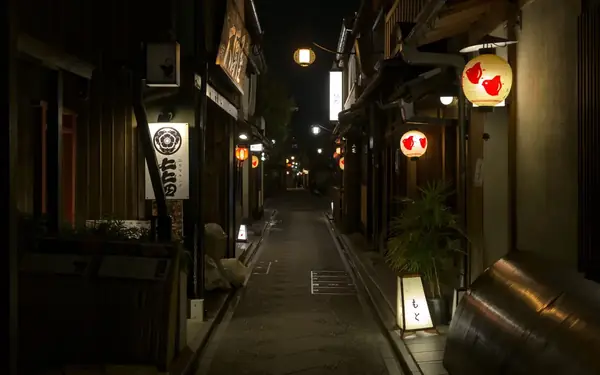
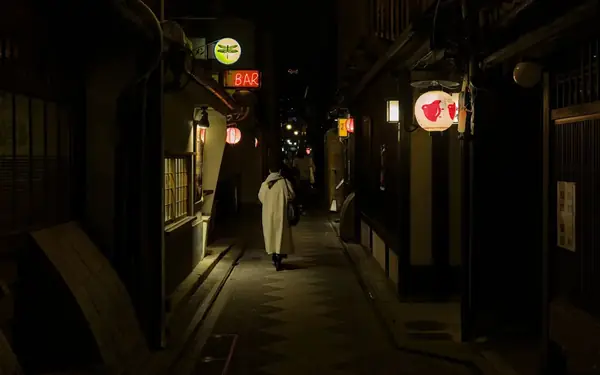
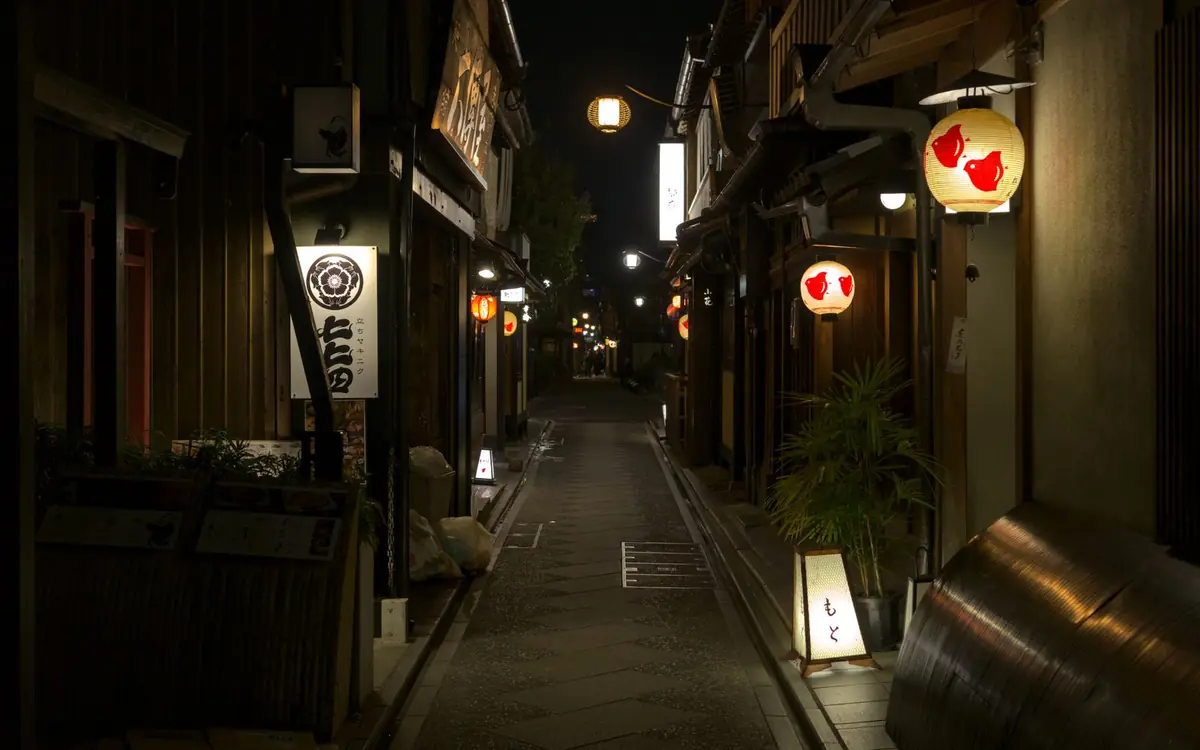
Winter is Pontocho's quiet season. The riverside platforms are packed away, the evenings are cold and the spring and autumn crowds are gone. The lanterns come on before half past five, the air over the river is clear, and on a weeknight you can often walk the whole lane without waiting for anyone. The exception is the week around New Year, when many restaurants close and the streets towards Yasaka Shrine fill up.
What winter is like
Early dusk. Kyoto's earliest sunsets come in early December, at about 16:45, and even in late January the sun is down by about 17:20. The lanterns are lit by late afternoon, so you can walk the lane at its most atmospheric and still be at dinner by 18:00. The evening planner gives exact times for any date.
Cold, mostly dry. According to the Japan Meteorological Agency, Kyoto's average temperature is 7.2°C in December, 4.8°C in January and 5.4°C in February, and these are the driest months of the year. Evenings by the river feel colder than the numbers suggest, because the Kyoto basin traps cold air. Snow falls on a few days most winters but rarely lasts long in the city centre.
Thinner crowds. Apart from the New Year holidays, December to February is one of the calmest times to visit. Weekday evenings in January and February are often the easiest time of the year to find a table without booking.
Practical tips for a winter evening
- Dress in layers. Restaurants and shops are heated, the street is not. A warm coat, scarf and gloves make the river walk far more pleasant.
- Watch your footing. On frosty or snowy days the stone paving in the lane can be icy, especially early in the morning.
- No riverside platforms. The noryo-yuka season ends on 15 October and starts again on 1 May. In winter, river views are from inside the restaurants.
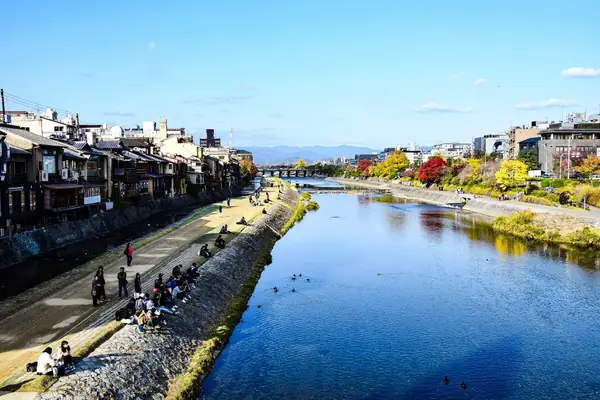
- Shorter walks by the river. The banks are lovely on a clear winter afternoon, but cold after dark. Do the river part of the sunset walk first, then the lane.
December
The year-end is a busy time in Kyoto's theatre world. Across Shijo Bridge, the Minamiza stages its kaomise, a showcase of leading kabuki actors, and the actors' names are displayed on wooden boards along the front of the building. You can see the boards from Shijo Bridge without buying a ticket.
Early December is also the end of the autumn leaves in central Kyoto. After that, the city settles into its quietest stretch of the year until the New Year rush.
New Year
Restaurant closures
New Year is Japan's biggest family holiday, and many restaurants in Pontocho close for several days around it, typically from just before 31 December until the first days of January. Opening days differ from place to place. If you will be in Kyoto between about 29 December and 3 January, check each restaurant's holiday dates before you plan an evening around it, and book early for the places that do open.
Okera-mairi at Yasaka Shrine
On New Year's Eve, Yasaka Shrine, at the far east end of Shijo-dori, holds Okera-mairi, a New Year's Eve custom with fire. After the evening rites on 31 December, sacred fire (okera-bi) burns in lanterns at the shrine through the night. Visitors light a length of rope from it and swing the rope in circles to keep it smouldering on the way home. Traditionally the fire was used to cook the first meal of the New Year, and the burnt rope is kept as a charm against fire.
The shrine is extremely crowded on New Year's Eve and the first days of January, and the streets around Shijo and Gion fill with people heading there. If you are staying near Pontocho, walking is easier than any bus or taxi.
Getting around
Trains run on holiday timetables over New Year, and some lines usually add late-night trains on New Year's Eve. Check the operators' websites before you travel; our transport guide lists the nearest stations.
January and February
Once the holidays are over, the city is quiet again. Cold, clear days are ideal for long walks along the Kamo River and through the covered shopping streets nearby (see a rainy day near Pontocho for indoor ideas). By late February the first plum blossom appears in Kyoto's temples and shrines, and the run-up to the cherry blossom season begins.