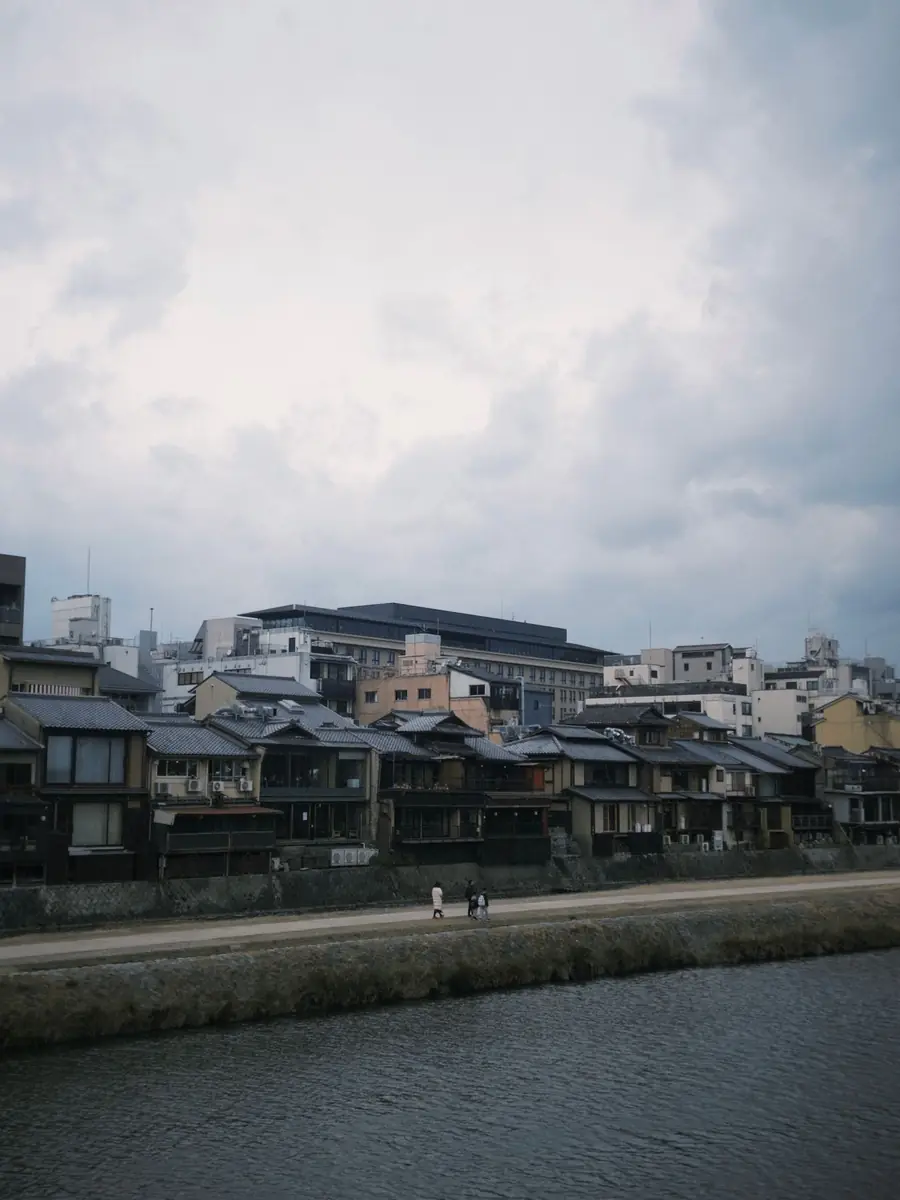
Etiquette in Pontocho: Visiting a Working Geisha District
By the Pontocho Park Guide team · Last reviewed · 6 min read
People live and work in Pontocho. Every evening cooks, waiters, geiko and maiko are getting ready for guests in buildings a couple of metres from where visitors stop for photos. Most visitors are perfectly considerate; the problem is simply that the lane is narrow and busy, so small habits add up. Here is what helps.
A little background
Kyoto has five kagai, the districts where geiko (the Kyoto word for geisha) and their apprentices, maiko, live, train and entertain: Gion Kobu, Miyagawacho, Pontocho, Kamishichiken and Gion Higashi. Guests are entertained in teahouses called ochaya. Pontocho has its own theatre, the Kaburenjo, its own arts school and its own May performance, the Kamogawa Odori.
If you are wondering who you just saw: maiko usually wear brighter kimono, a long obi that hangs down at the back, and their own hair in an elaborate style with dangling ornaments. Geiko dress more simply, with a shorter obi, and usually wear a wig.
Walking the lane
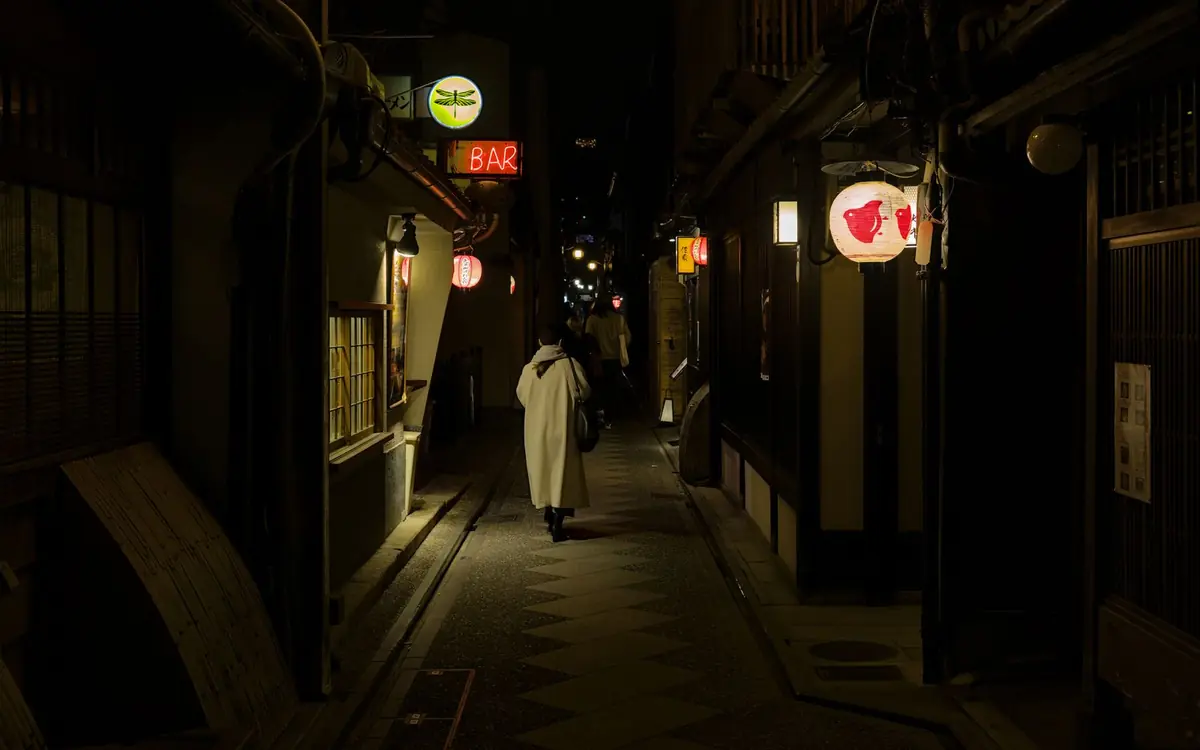
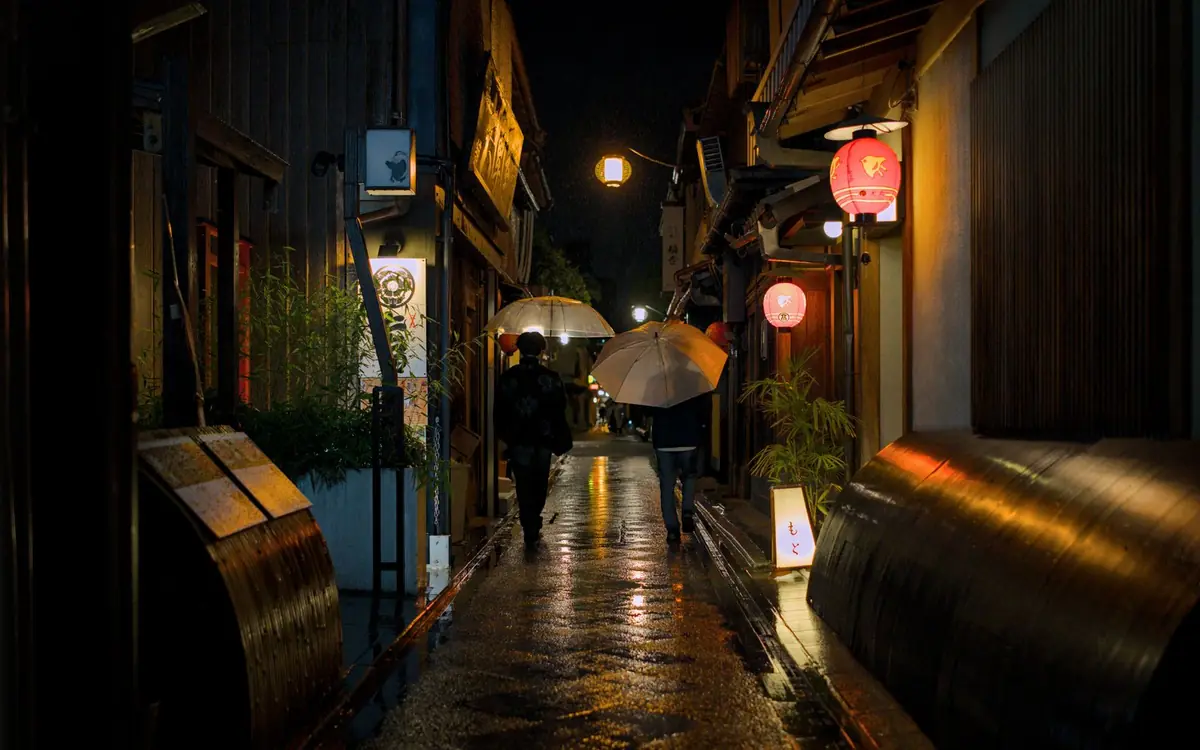
In places the lane is less than two metres wide, which is about one person each way plus a delivery trolley. Keep to one side, and if you want to stop, step into a gap between buildings first. Smaller groups make life easier for everyone, including the staff carrying crates of beer at six o'clock.
Keep your voice down, especially later in the evening. Some of the buildings, and the area around the park, are people's homes.
Eating while walking is considered bad manners in Kyoto, and there are almost no bins, so finish your snack before you go in. Smoking on the street is restricted in central Kyoto; use the designated smoking areas.
Photos
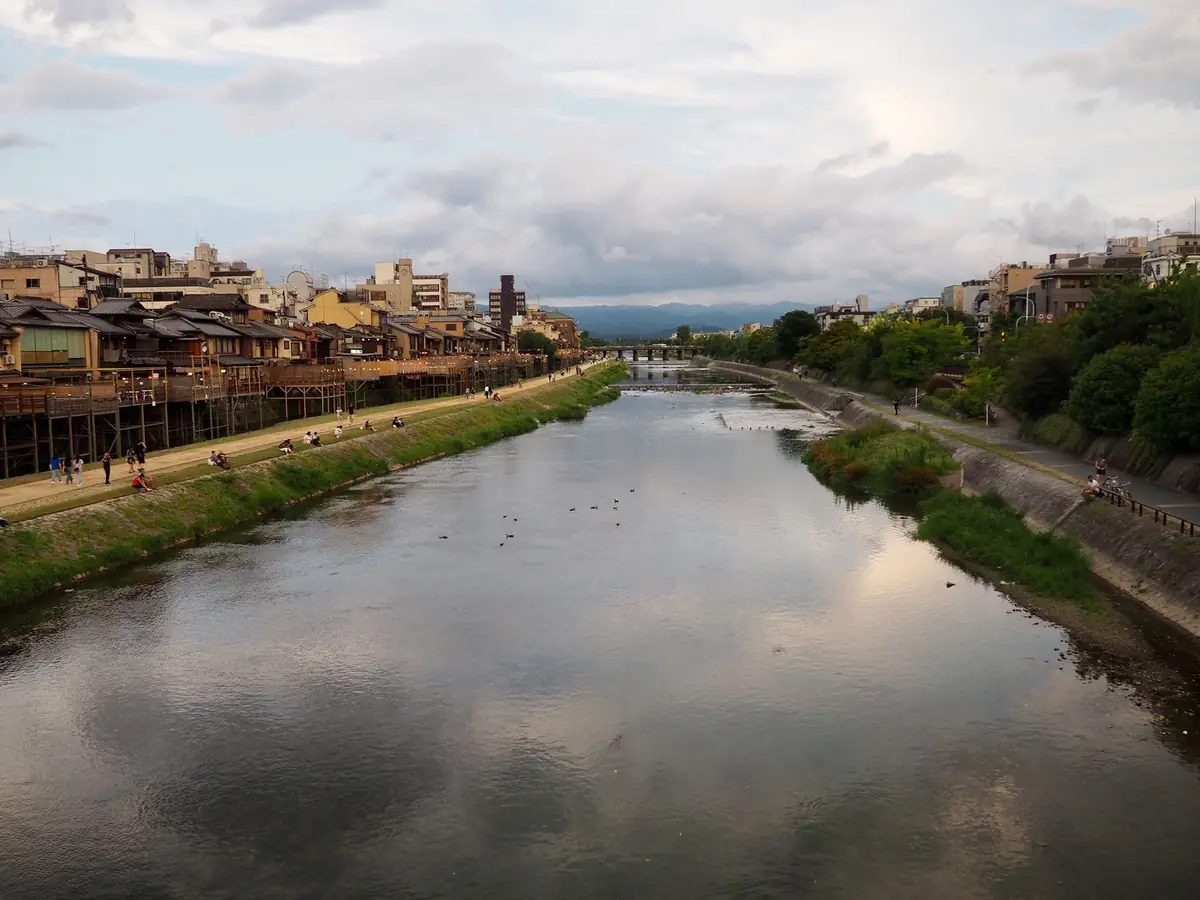
Photographing the lane, the lanterns and the park is fine. What causes trouble is going further: stepping into side passages, doorways or restaurant gardens for a better angle. Many of the roji off the main lane are private, and some carry signs asking visitors to stay out. A tripod or selfie stick has no room here. And please don't photograph people eating, whether through a window or up on the riverside platforms.
If you see a geiko or maiko
In the early evening you may see maiko or geiko walking quickly along the lane. They are almost certainly on their way to an appointment, and being stopped means arriving late.
Don't stop, follow, surround or touch them, and don't ask for photos in the street. If you take a picture from a distance, do it without getting in the way and without flash. If you would like to actually meet a maiko, the tea service at the Kamogawa Odori or an experience booked through a reputable organiser are the proper ways to do it.
Kyoto also has plenty of studios that dress visitors up as maiko for the day. Those are tourists in costume, but the same courtesy applies.
Eating and drinking
Pontocho has everything from tiny yakitori counters to formal kaiseki restaurants, and most are happy to see first-time customers. A few things are useful to know.
Teahouses are not restaurants. Ochaya, where geiko entertain, traditionally don't take first-time guests without an introduction. That custom is called ichigen-san okotowari. It does not apply to ordinary restaurants and bars.
Book ahead if you have a particular place in mind. Many restaurants are small, and weekends and the platform season fill up. If your plans change, cancel. Small kitchens shop and prepare for each booking, and no-shows hurt them.
Look before you sit. Most places post a menu outside. If you can't see prices, ask first.
Seat charges are normal. Some izakaya and bars add a small cover charge and bring a small dish (otoshi) without being asked. It isn't a scam, though it's fine to ask about it.
Don't tip. Tipping isn't part of Japanese restaurant culture; some higher-end places add a service charge instead. Cards are widely accepted now, but some small places are still cash only.
In the park
Pontocho Park is a neighbourhood park first. Local children use the swings and the play hill. Sit on the benches, rest your feet, keep it quiet after dark and take your rubbish with you. If you see cats, please don't feed them.
The short version
Walk in small groups and keep to the side. Stay out of private passages. Leave geiko and maiko alone. Finish your food before you go in and carry your rubbish out. Book, and cancel if you can't make it. The lane is at its best when it is calm, and that is mostly up to the people walking through it.