The Takase River and Kiyamachi: Pontocho's Quieter Neighbour
By the Pontocho Park Guide team · Last reviewed · 6 min read
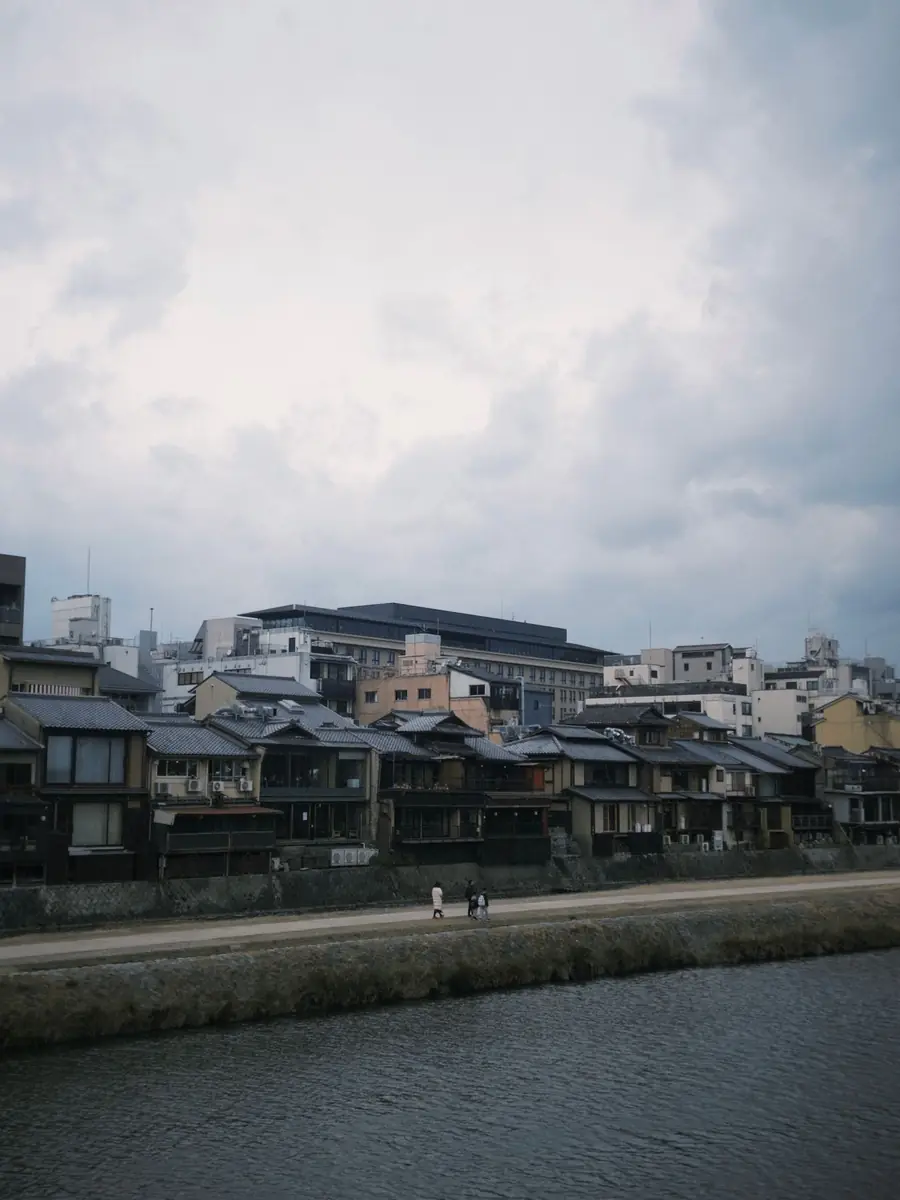
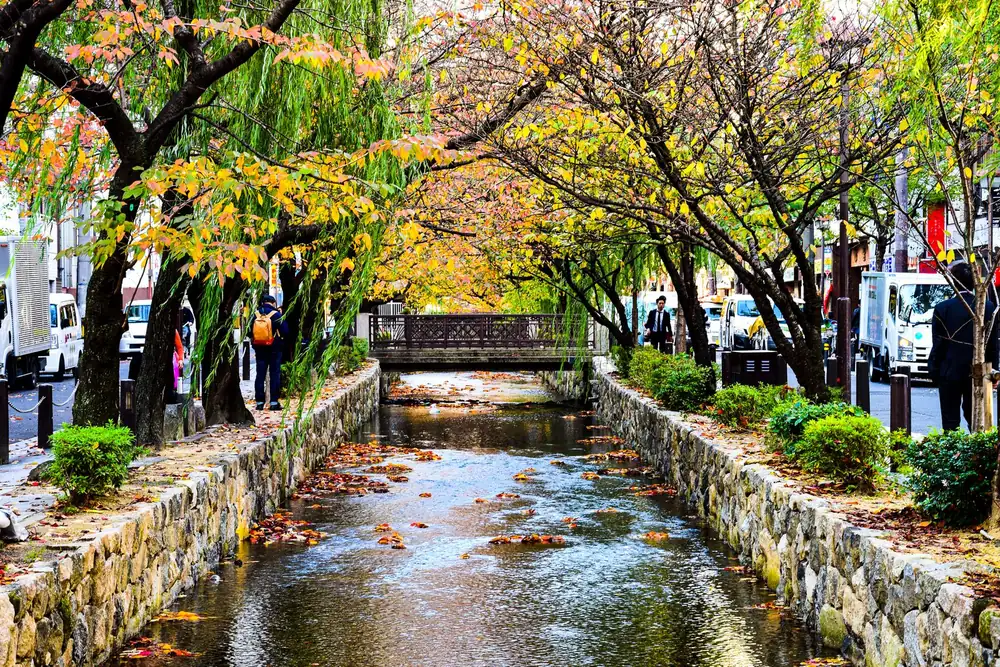
One street west of Pontocho, a shallow, clear stream runs between willows and cherry trees. It looks like a garden feature. It is actually a 400-year-old freight canal, and without it Pontocho would probably never have existed.
A merchant's canal
In the early seventeenth century Suminokura Ryoi, a Kyoto merchant who had already opened other rivers in the region to boats, set out to link the centre of the city with Fushimi, the river port to the south that connected Kyoto with Osaka. With his son Suminokura Soan he dug a canal running parallel to the Kamo River. Sources date its opening to somewhere between 1611 and 1614.
The water was shallow, so cargo travelled in flat-bottomed boats called takasebune, which gave the canal its name. Going upstream, the boats were often hauled by men walking along the bank. Rice, timber, charcoal, salt and other everyday goods came into the city this way, and the Suminokura family charged for the traffic.
Ichi-no-Funairi, the first landing
Boats loaded and unloaded in side basins called funairi, cut into the west bank so that boats could pull in and turn. There were once nine between Nijo and Shijo. Only the northernmost, Ichi-no-Funairi ("the first landing"), is left.
It is on Kiyamachi-dori just south of Nijo-dori: a stone-lined basin with a replica takasebune moored in it, designated a National Historic Site in 1934. It is small and easy to walk past, so look for the boat.
How the canal made the neighbourhood
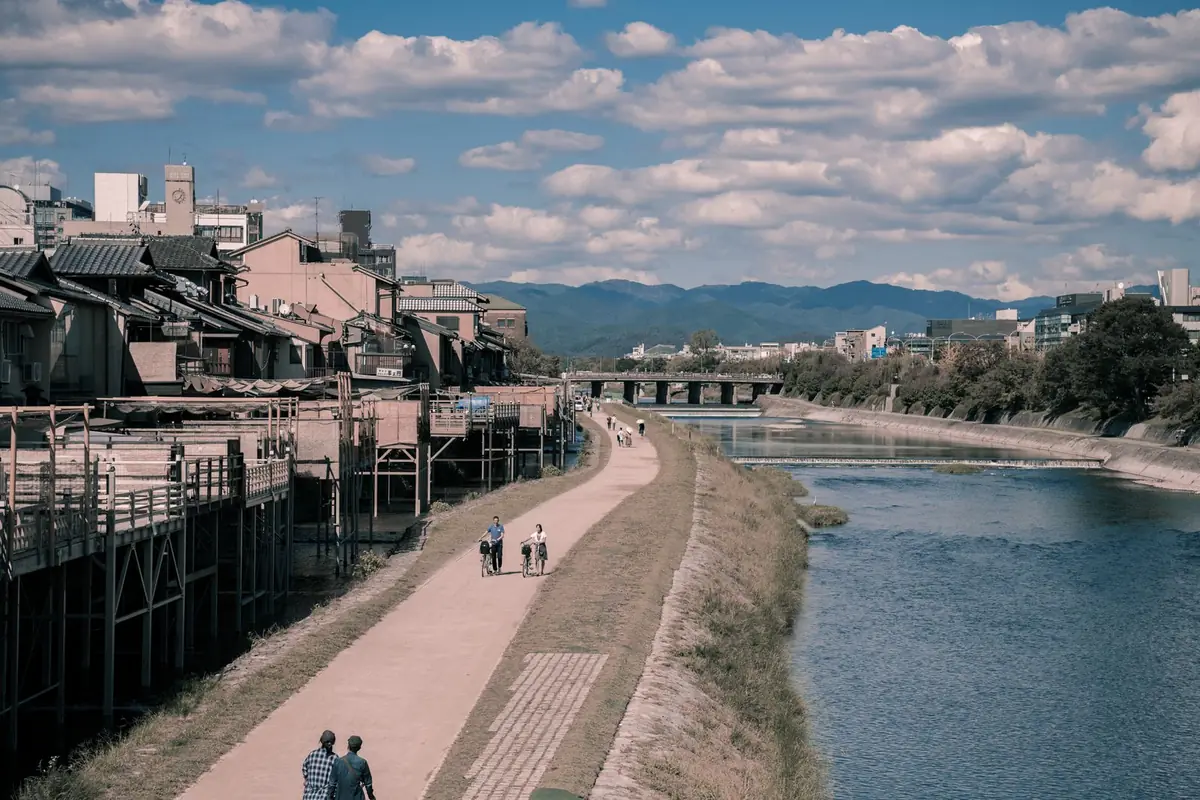
The street beside it, Kiyamachi, takes its name from the timber dealers (kiya) and wholesalers who set up along the landings. Pontocho grew on the strip of land between the canal and the Kamo River once that was reclaimed in 1670, and its first inns and teahouses served the boatmen and travellers. There is more on that in our history of Pontocho.
The canal carried freight for about three centuries. Railways and roads took the work away, and commercial traffic had ended by around 1920.
A walk from Nijo to Shijo (30–40 minutes)
Start at Ichi-no-Funairi, a few minutes from Kyoto Shiyakusho-mae Station, and follow the canal south. North of Sanjo the street is quieter, with older townhouses, small hotels and restaurants. Watch for the stone markers along the way. In the last years of the Edo period this area was full of inns and residences used by samurai from different domains, and several markers record events from that time.
Across Sanjo-dori, Kiyamachi changes character and becomes a busy street of bars and izakaya, particularly after dark. Narrow passages connect it to Pontocho in several places; use the ones that are clearly open to the public, then walk south through the lane to Pontocho Park for a sit-down. Finish at Shijo-dori, from where it is a few steps to the riverbank or across the bridge to Gion.
When to go
Cherry blossom season, from late March into early April, is when the canal is at its prettiest, with the blossoms hanging low over the water. It is also when it is most crowded. Early summer brings fresh green willows and fewer people. Because Kiyamachi is a nightlife street, mornings there are very quiet, which is ideal for photos.
Worth knowing
The canal is shallow, but don't climb down into it or onto its walls. South of Sanjo there are plenty of bars and clubs; be wary of street touts at night and agree on prices before you sit down anywhere. The street is narrow and taxis use it, so keep to the edge, especially with children.