Cherry Blossom Near Pontocho: When and Where
 By Max R., last reviewed , 4 min read
For about two weeks each spring, the streets around Pontocho are among the prettiest places in Kyoto. Cherry trees hang over the Takase River one street west, line parts of the Kamo River banks, and fill the canal-side lanes of Gion across the water. You barely need to leave the lane to see it. The harder part is the timing, because the peak lasts only about a week.
When the blossom opens
The Japan Meteorological Agency watches a sample somei-yoshino tree in Kyoto every spring. It declares the blossom "open" when five or six flowers have opened on that tree, and "in full bloom" when about 80% of the buds are open. Based on 1991–2020, the normal opening date in Kyoto is 26 March, and full bloom usually follows about a week later, around the start of April.
That is only the average. In a warm year the trees can open a week earlier; after a cold March, a week later. Over recent decades the dates have been moving earlier. Forecasts appear from early March, and the agency announces the actual opening day when it happens.
Not every tree follows the same calendar. Weeping cherries (shidare-zakura) tend to open a little earlier than somei-yoshino, and some later varieties keep flowering into mid-April. If you arrive after the main peak, there is usually still something in bloom.
Once full bloom arrives, the petals start to fall within a week, sooner if there is wind or rain. On the Takase River the fallen petals collect on the water for days afterwards.
The best spots within walking distance
The Takase River and Kiyamachi
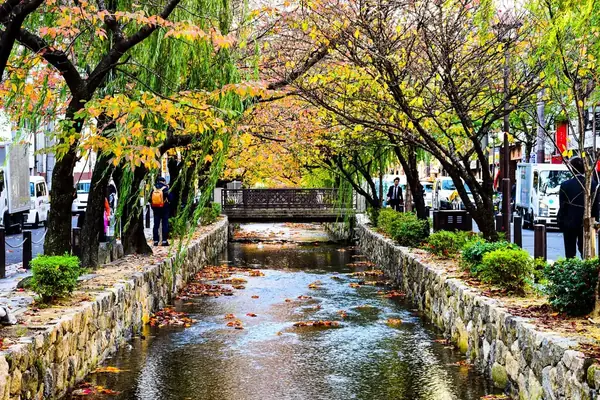
The shallow canal one street west of Pontocho is the closest spot and, for many people, the best. Cherry trees and willows line Kiyamachi-dori along the water, and the branches hang low enough to almost touch it. The stretch north of Sanjo, towards the old boat basin at Ichi-no-Funairi, is usually calmer than the busy blocks between Sanjo and Shijo. From Pontocho Park it is a couple of minutes' walk.
The Kamo River banks
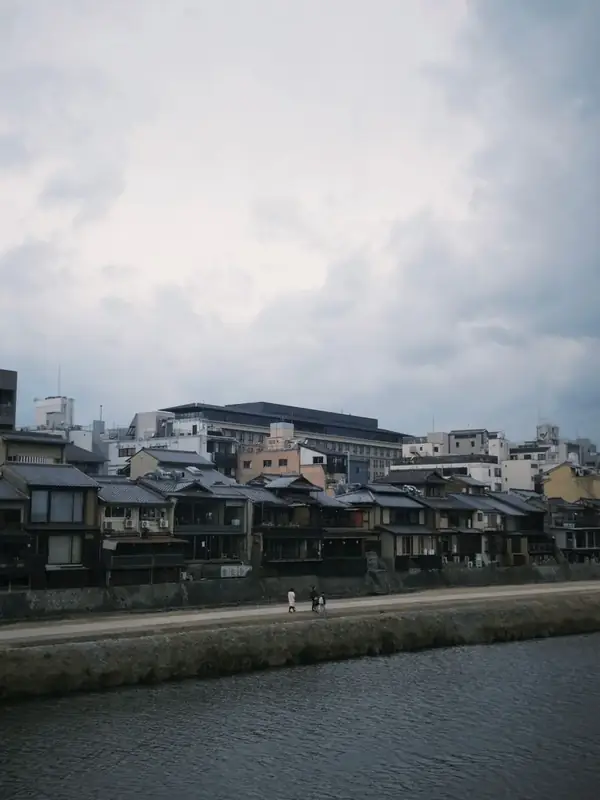
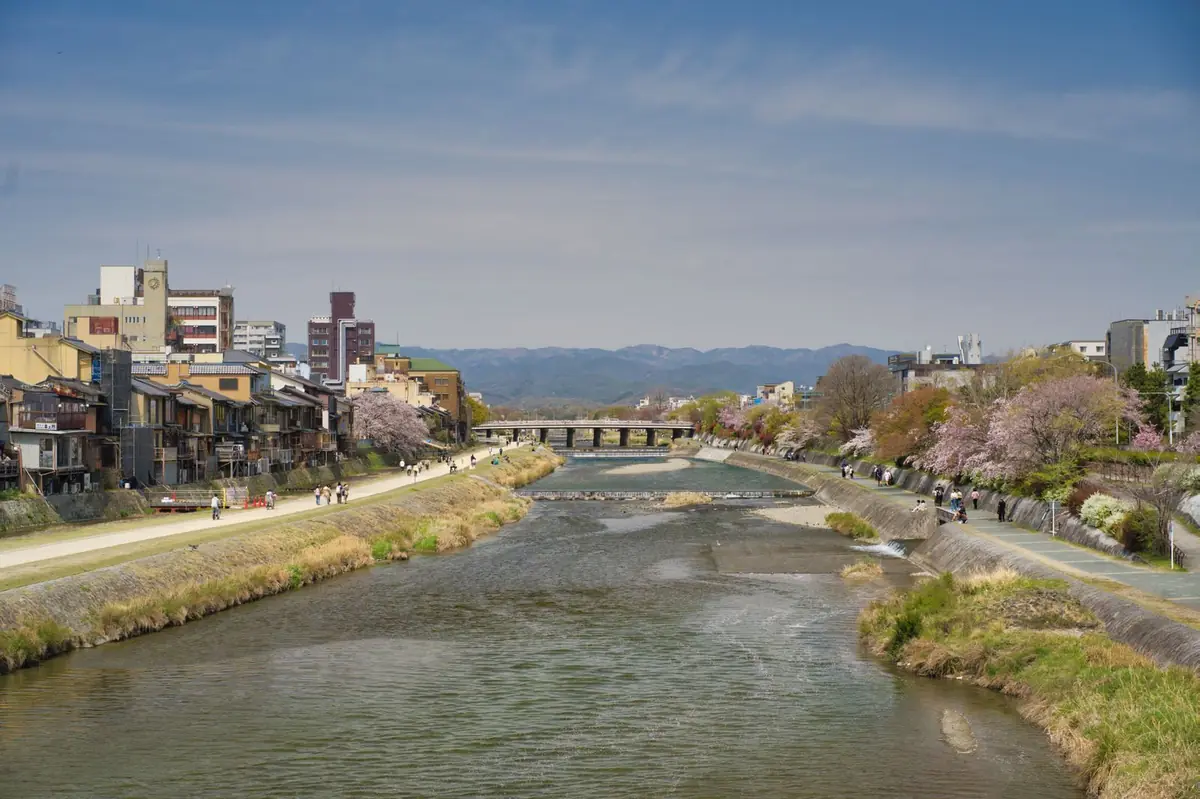
Parts of the riverside paths have cherry trees, and the open banks are where Kyoto people come to sit, eat and look at the hills. From the bridges you can see the pale lines of blossom stretching along the water. For a longer walk with blossom along the way, head north along the west bank past Sanjo; our Kamo River walking guide describes the route.
Gion Shirakawa
Across Shijo Bridge and north of Shijo-dori, the Shirakawa canal runs past wooden teahouses under cherry trees and willows. It is about ten to fifteen minutes on foot from Pontocho and one of the most photographed corners of Kyoto in spring, so expect company. Remember that this is a working geisha district too; the same etiquette applies.
Maruyama Park
Behind Yasaka Shrine, at the far east end of Shijo-dori, Maruyama Park is Kyoto's best-known blossom-viewing park. Its centrepiece is a huge weeping cherry, and in season the park fills with picnic sheets, food stalls and evening crowds. Allow about 20 minutes on foot from Pontocho.
Blossom after dark
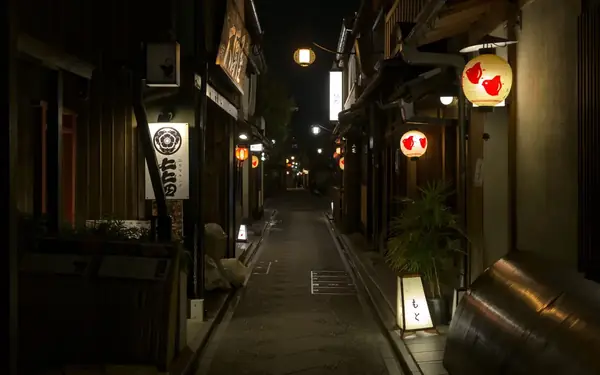
Blossom season is also a good time to see Pontocho after dark. Walk the lane at dusk, then step one street west onto Kiyamachi, where street lights and the glow from the bars and restaurants light up the trees over the Takase River. Several temples and parks in Higashiyama also hold special evening openings or light-ups during the season; these change from year to year, so check the City of Kyoto's official travel guide for the current schedule.
The evening planner gives sunset times for any date, and in late March and early April it flags the blossom season and the extra crowds that come with it.
Picnics by the river: the rules
Sitting on the Kamo riverbank with food and drink is a normal part of hanami, the custom of blossom viewing, and it is allowed. Kyoto Prefecture's Kamo River ordinance does set some limits:
- No barbecues in the designated zones of the river, including the area around Demachiyanagi. Cooking with fire is the target of the ban, and ignoring an order to stop can lead to a fine.
- No dangerous fireworks, such as rockets and firecrackers, along most of the river.
- Take your rubbish home. There are few bins on the riverbank.
- Mind the kites. Black kites patrol the river and are expert at snatching food from hands and picnic sheets. Keep food covered.
Wherever you are, do not pick flowers, shake branches or climb the trees. Old cherry trees are fragile, and many are cared for by local volunteers.
Planning a blossom-season visit
Late March and early April are among the busiest weeks of the year in Kyoto, and hotels and Pontocho restaurants fill up well ahead (see eating in Pontocho). The Takase River and Shirakawa are at their calmest early in the morning. Days can be mild, but evenings by the water are often cool, so bring a layer. And if your dates allow it, keep a couple of days loose so you can move the blossom walk to the best weather.