Kamogawa Odori: Pontocho's May Dances
By the Pontocho Park Guide team · Last reviewed · 6 min read
Every May the geiko and maiko of Pontocho take the stage of their own theatre at the north end of the lane. The Kamogawa Odori is one of the easiest ways for a visitor to see Kyoto's traditional dance without an introduction or a very large budget, and it has been running since 1872.
What it is
The name means "Kamo River dances". It is a stage show performed by the geiko (Kyoto's word for geisha) and maiko (apprentices) of Pontocho, with live shamisen, drums and flute. Each of Kyoto's five geisha districts has its own seasonal performance. Pontocho's comes in May, when evenings by the river start to feel like summer.
It began as a sideshow to the first Kyoto Exposition in 1872, part of the city's effort to win back visitors after the capital moved to Tokyo. Apart from breaks in wartime and other emergencies, it has been staged every year since.
The programme
The pieces change each year, but the shape stays the same. The first half is a dance drama: a short story told through movement and music, often borrowed from classical literature or legend, with full costumes and sets. The second half is pure dance, a run of shorter numbers that the organisers compare to a picture scroll being unrolled, usually moving through the seasons and ending with the whole company on stage.
In 2026 the two pieces were Yaegoromo Koi no Mizuumi and Harugasumi Rakugai Meguri. The official site posts an English outline of each year's programme, and you do not need to know anything in advance to follow it.
Seats and prices
Official prices for 2026:
| Ticket | Price (2026) |
|---|---|
| Special seat with tea ceremony | ¥7,000 |
| Special seat | ¥6,000 |
| Regular seat | ¥4,000 |
Prices have changed over the years, so check the current ones before booking.
Is the tea ticket worth it?
For a first visit, probably yes. On the fourth floor of the theatre geiko and maiko host a short tea service before the show: you watch a geiko prepare tea, and you are served a bowl of matcha and a sweet. It is done at tables and chairs, in a style called ryurei that was devised for the same 1872 exposition, so nobody has to kneel. The little plate the sweet comes on is yours to keep.
Tickets
Bookings go through the official Kamogawa Odori website, which has an English version, and sales usually open in early spring. Weekends and the Golden Week holidays at the start of May go first. If a performance has not sold out, seats may still be available at the theatre during the run, but it is not something to count on.
Give yourself 20 to 30 minutes before the curtain, and more with a tea ticket, because the tea service happens before the show.
Getting to the Kaburenjo
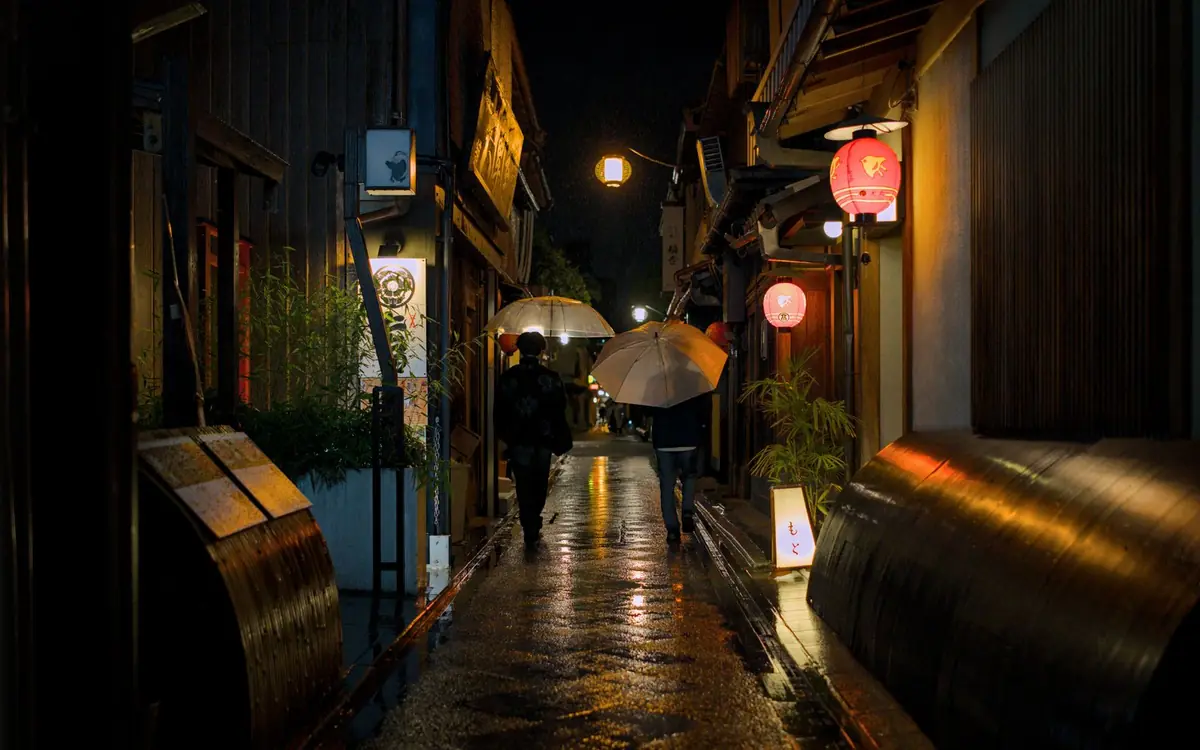
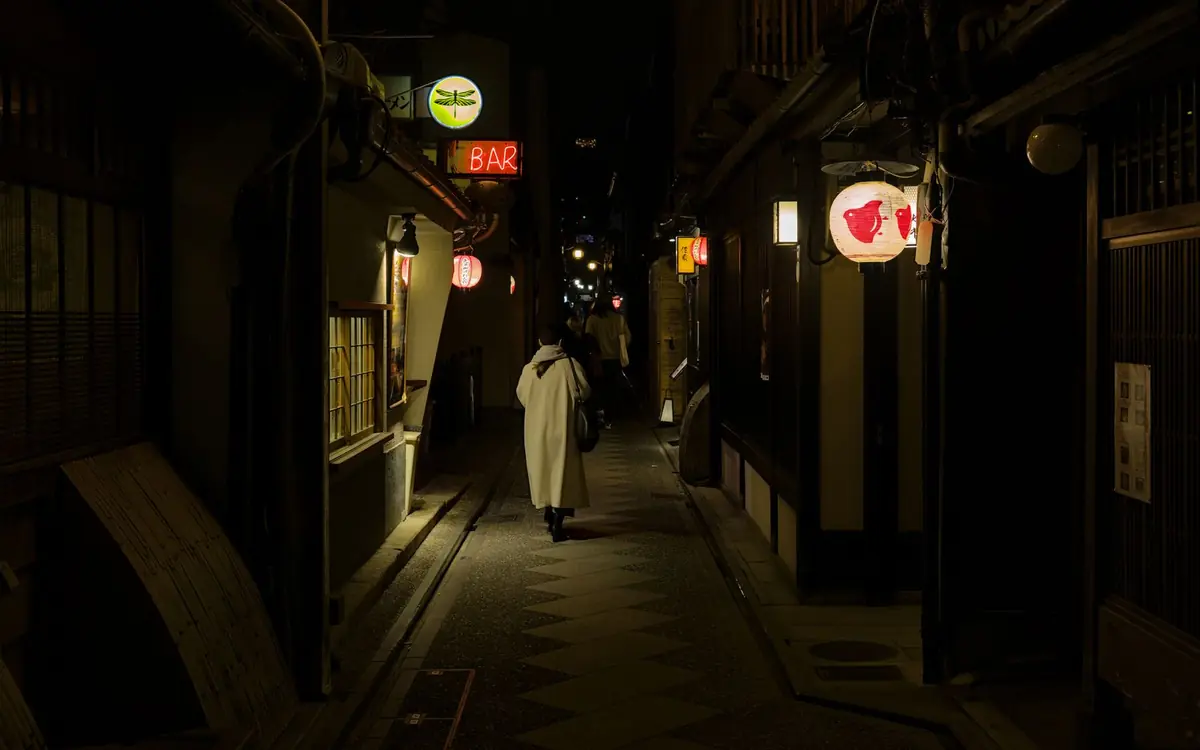
The theatre is at the north end of Pontocho, a minute from Sanjo-dori. Keihan Sanjo and Kyoto Shiyakusho-mae on the Tozai subway line are both around five to seven minutes away on foot. From Hankyu Kyoto-Kawaramachi, walk north up the lane for about ten minutes, which takes you past Pontocho Park on the way. Our transport guide has routes from Kyoto Station, Osaka and the airports.
An afternoon around the show
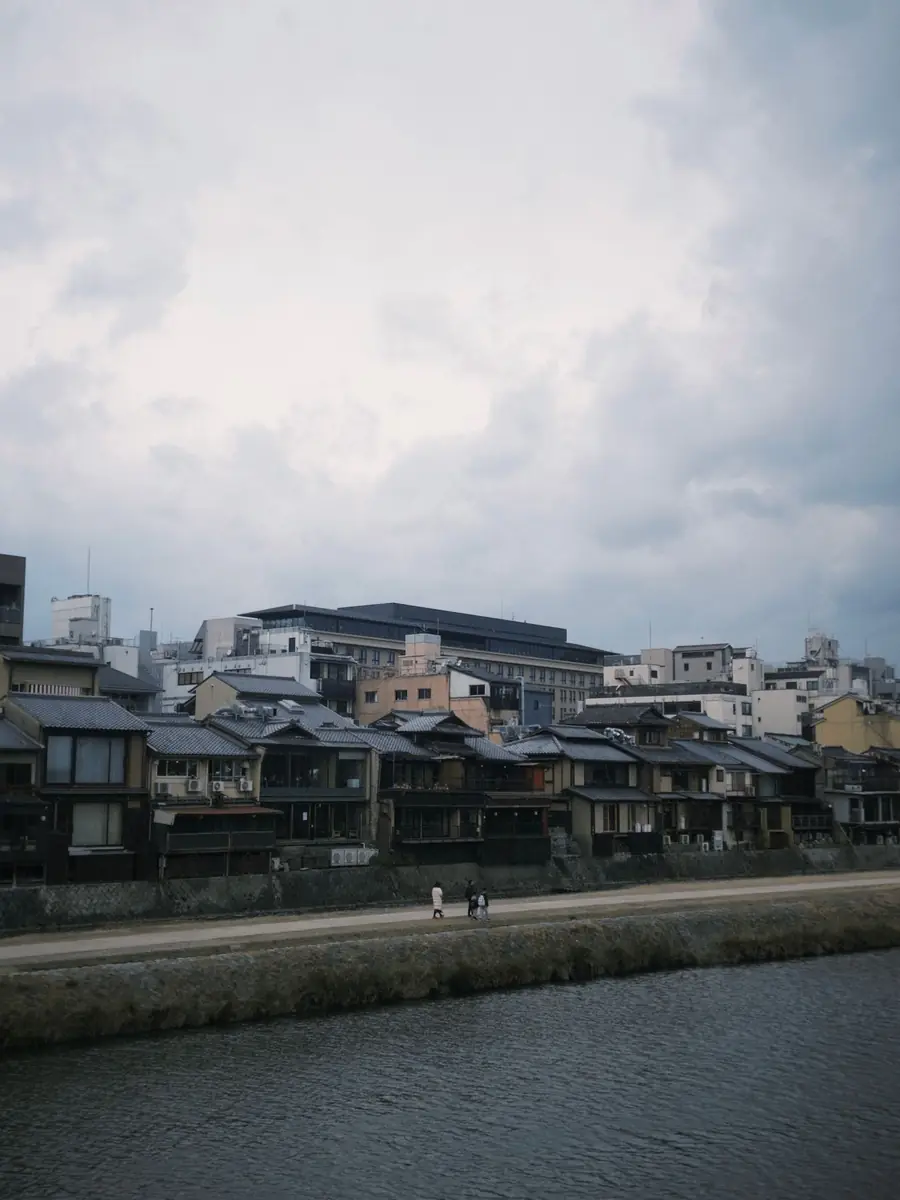
The last performance starts at around four, so there is time to make an afternoon of it. Come out of the theatre, walk south through the lane, and stop at the park for a few minutes. From 1 May the restaurants on the river side have their summer platforms up, so an early dinner over the water is an option if you have booked. Then go down to the riverbank as the light fades.
Other chances to see Pontocho's dancers
The autumn recital, Suimeikai, runs for several days in October and is a more formal programme of classical dance. In 2026 it was held from 15 to 20 October. In recent summers the theatre has also opened as a seasonal beer hall where guests can talk with geiko and maiko; in 2026 it ran in August. Both are announced a few weeks ahead by the Pontocho Kabukai association.
In the theatre
Photos and recordings are not allowed during the performance, and phones should be silent and dark. After the show, please don't wait by the stage door or follow the performers into the street. Our etiquette guide covers the rest.