From Riverbed to Geisha District: A Short History of Pontocho
By the Pontocho Park Guide team · Last reviewed · 7 min read
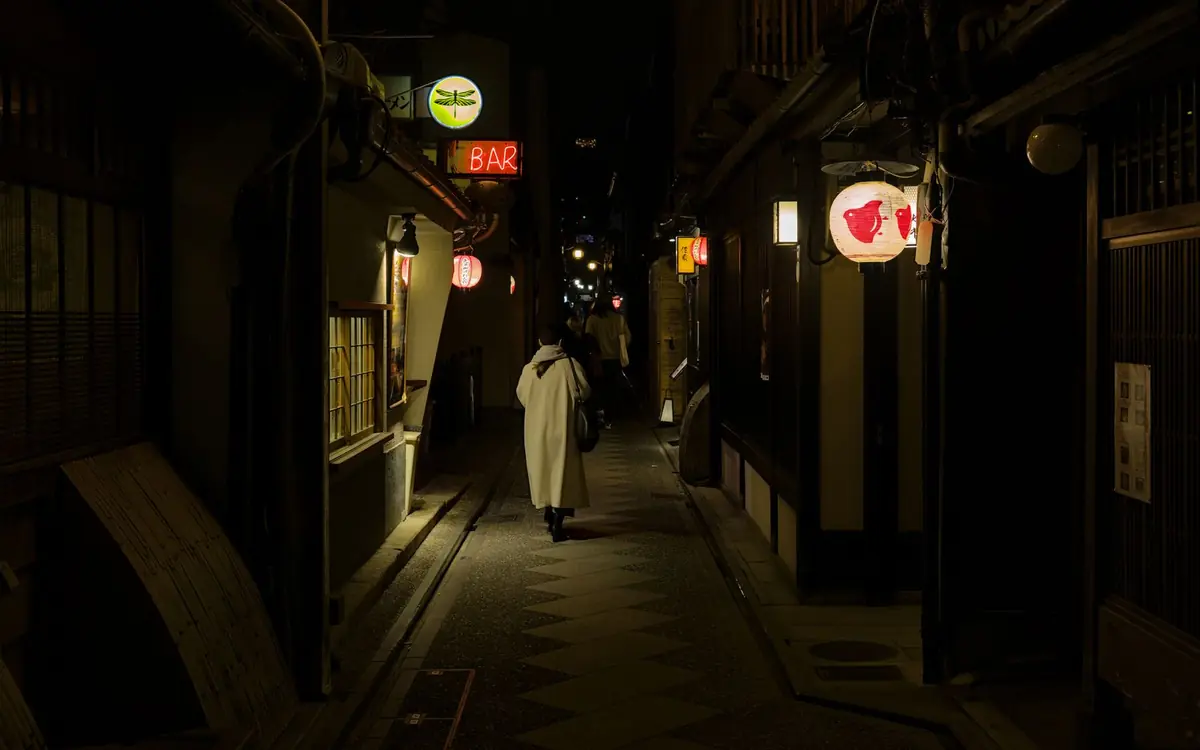
Stand in Pontocho on a quiet evening and it is easy to assume the lane has always been there. It hasn't. Four hundred years ago this was a strip of gravel in the bed of the Kamo River, and it took two building projects and a lot of hungry boatmen to turn it into a street.
A sandbar between two rivers
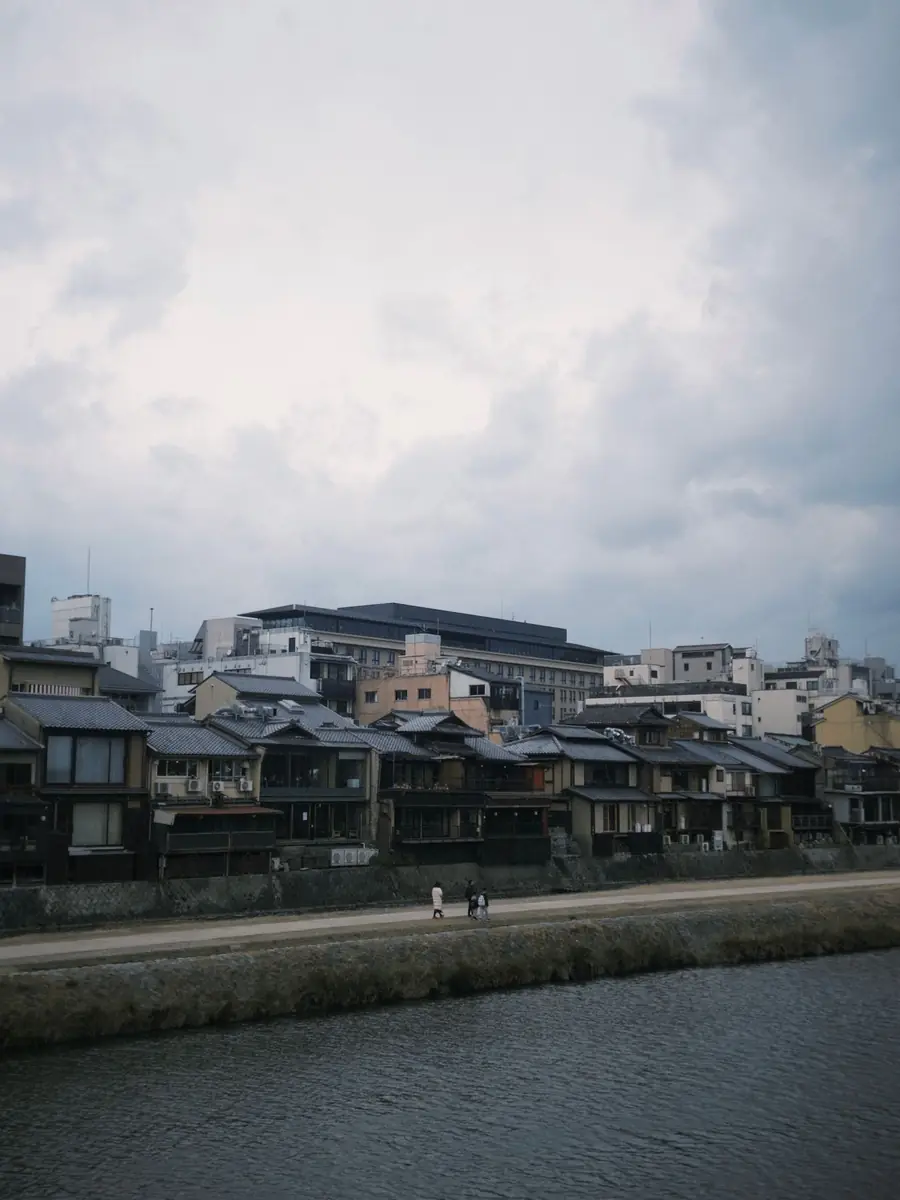
Before the 1600s the Kamo River was wider and less tame than it is now. It flooded often, and its west bank around today's Pontocho was mostly sand and stones.
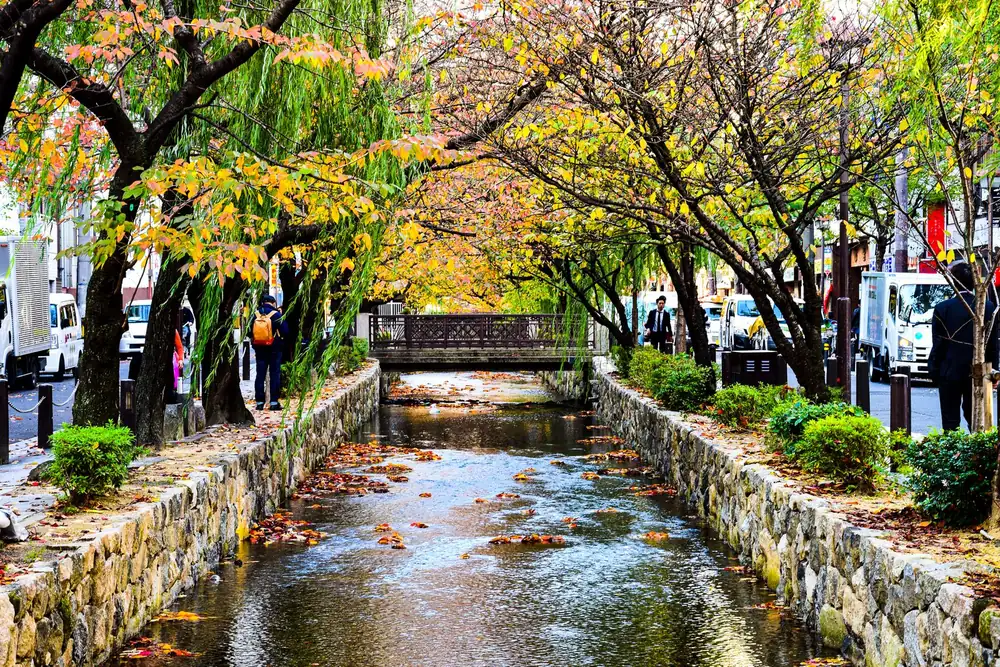
The first change came in the early 1610s, when the merchant Suminokura Ryoi and his son Soan cut the Takase River, a shallow canal running parallel to the Kamo, so that flat-bottomed boats could carry goods between central Kyoto and the port at Fushimi. The second came in 1670, when new embankments along both waterways fixed the riverbank in place. The narrow strip of land left between the canal and the river was divided into plots, and a lane grew along it.
You can still feel that shape on the ground. Walk a minute west from almost anywhere in Pontocho and you reach Kiyamachi and the canal; walk east through one of the side passages and you are above the river. The district is, quite literally, the land in between.
Boatmen, travellers and the first teahouses
The new street sat next to one of the busiest freight routes in the city. Boats unloaded at landings along the canal, and travellers coming in on the Tokaido highway ended their journey at Sanjo Bridge, a few steps from the north end of the lane. Somewhere to eat, drink and sleep was an easy sell.
The local geisha association dates the first teahouses to around 1712. They served boatmen and travellers and employed women to pour tea. Over the next hundred years the area grew into an entertainment quarter, and permission to employ geisha is said to have been granted in 1813. From then on Pontocho developed alongside Gion as one of the places where Kyoto's dance, music and hospitality were taught and practised.
Where the name comes from (probably)
The characters 先斗町 do not normally read "Pontocho", and nobody has settled where the name came from. Three explanations come up again and again.
The best known is Portuguese: ponta means "point" or "tip", and the word could have arrived with Portuguese traders in the sixteenth century. The district does sit at the eastern edge of the old city, so the idea is not far-fetched. A second, more playful theory compares the strip of land between two rivers to a tsuzumi hand drum, skin on both sides, which goes "pon" when struck. A third links the first character, 先 ("ahead"), to a gambling term for betting only on the opening round of a card game.
None of them is proven. The Portuguese story is the one guides like to tell, and it is a good story, but treat it as that.
1872: a dance and a bird
In 1869 the emperor moved to Tokyo and Kyoto lost its role as the capital, along with a lot of its visitors. The city answered with exhibitions, and for the first Kyoto Exposition in 1872 Pontocho put its dancers on a public stage. That was the first Kamogawa Odori. Apart from breaks in wartime and other emergencies it has been staged ever since, and the 2026 season was billed as the 187th performance.
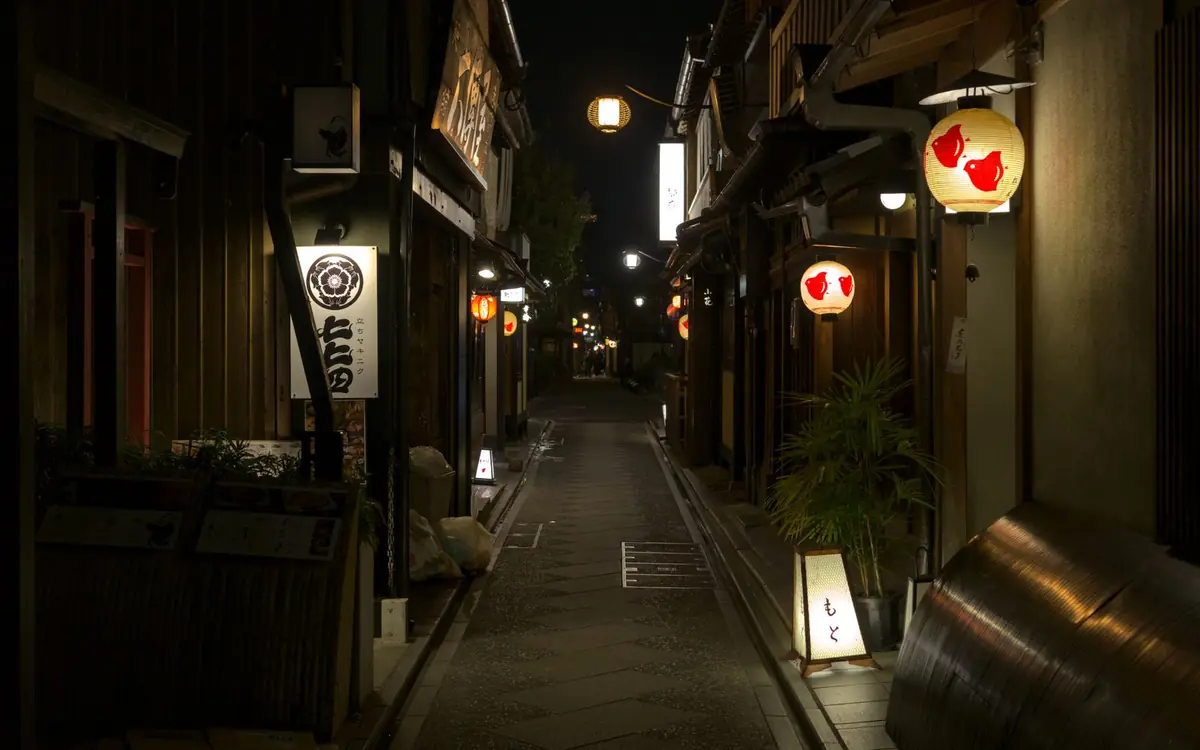
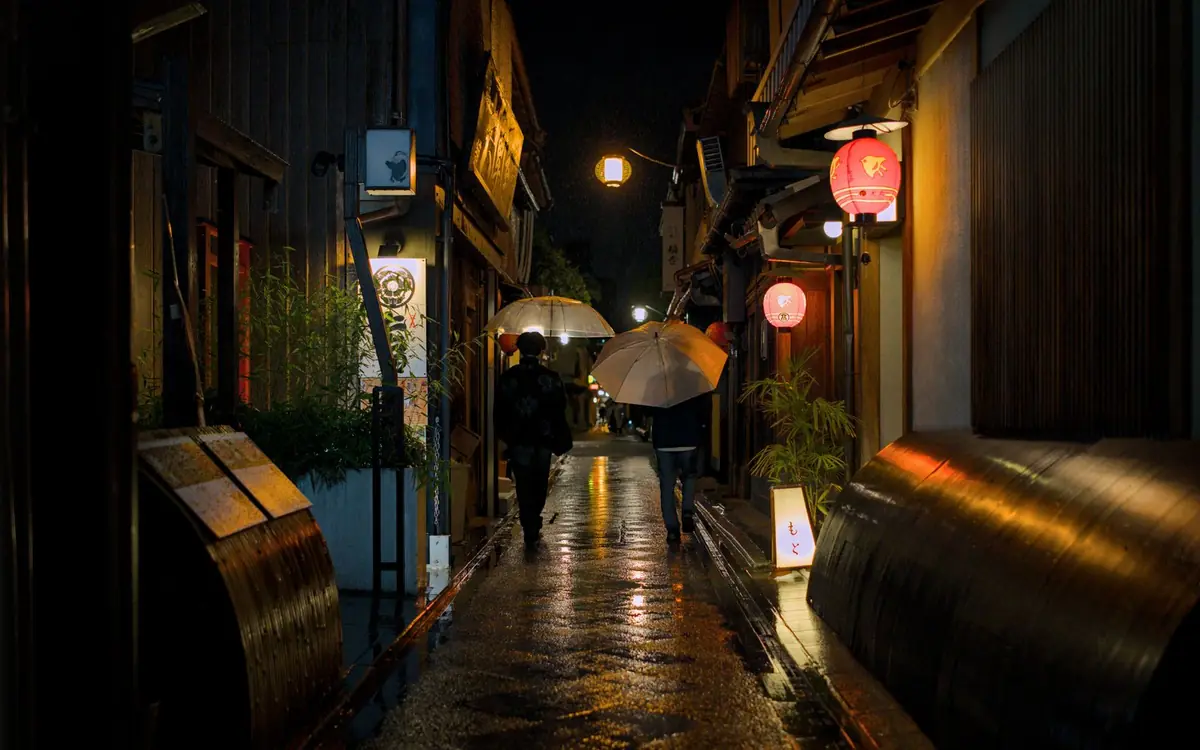
The district's emblem dates from the same period: a stylised chidori, or plover, a small wading bird long associated with the Kamo River in winter. Look up at the paper lanterns outside the teahouses and restaurants and you will see it. It is the quickest way to know you are in Pontocho and not somewhere else in Kyoto.
The Kaburenjo theatre
At the Sanjo end of the lane stands the Pontocho Kaburenjo, the district's theatre and rehearsal hall. The present building was finished in 1927 to a design by Kimura Tokusaburo, an architect who specialised in theatres, and was described at the time as modern architecture with an Asian flavour. Among the small wooden houses of the lane it is one of the few large buildings, with tiled roofs over concrete walls.
It is still in daily use. The geiko and maiko of Pontocho rehearse there, the Kamogawa Odori is staged there each May, and the autumn recital, Suimeikai, follows in October.
Pontocho in the twentieth century and now
The lane kept its small scale. Many of the buildings are still two-storey wooden townhouses, and on the east side they back straight onto the river. In summer those restaurants build wooden decks out over the bank, a custom thought to go back to the late 1500s and still going as the noryo-yuka season.
In 1961 the city opened a small park about halfway along the street: Pontocho Park, roughly 860 square metres with a few trees, swings and a little play hill. It remains one of the only open spaces on the lane.
The most recent change is overhead, or rather the lack of anything overhead. Pontocho is between about 1.8 and 4.4 metres wide, too narrow for the usual way of burying power lines. In 2016 the city started trialling compact underground ducts here instead, and by 2021 the utility poles were gone. A few of them ended up in Pontocho Park, cut down and fitted with wooden seats to make benches.
Things to look for on the way
If you walk the lane with this history in mind, a few details stand out: the plover on the lanterns; the Kaburenjo's roofs at the north end; the numbered side passages, some of which still run through to Kiyamachi; the wooden lattice fronts, which let air in and keep eyes out; and, in the park, the benches made from old utility poles. Our sunset route passes all of them.