Photographing Pontocho: Views, Light and Manners
 By Max R., last reviewed , 4 min read
Lanterns, lattice fronts, stone paving and a river behind it: Pontocho ends up in a lot of photographs. It is also a lane barely wide enough for two people to pass, where people live and work, so where you stand matters as much as when you go. Below are the classic viewpoints, the best times of day and the few rules worth knowing.
The classic views
From Shijo Bridge, looking north
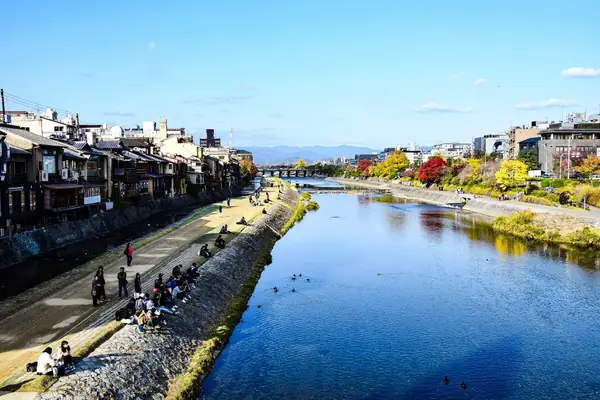
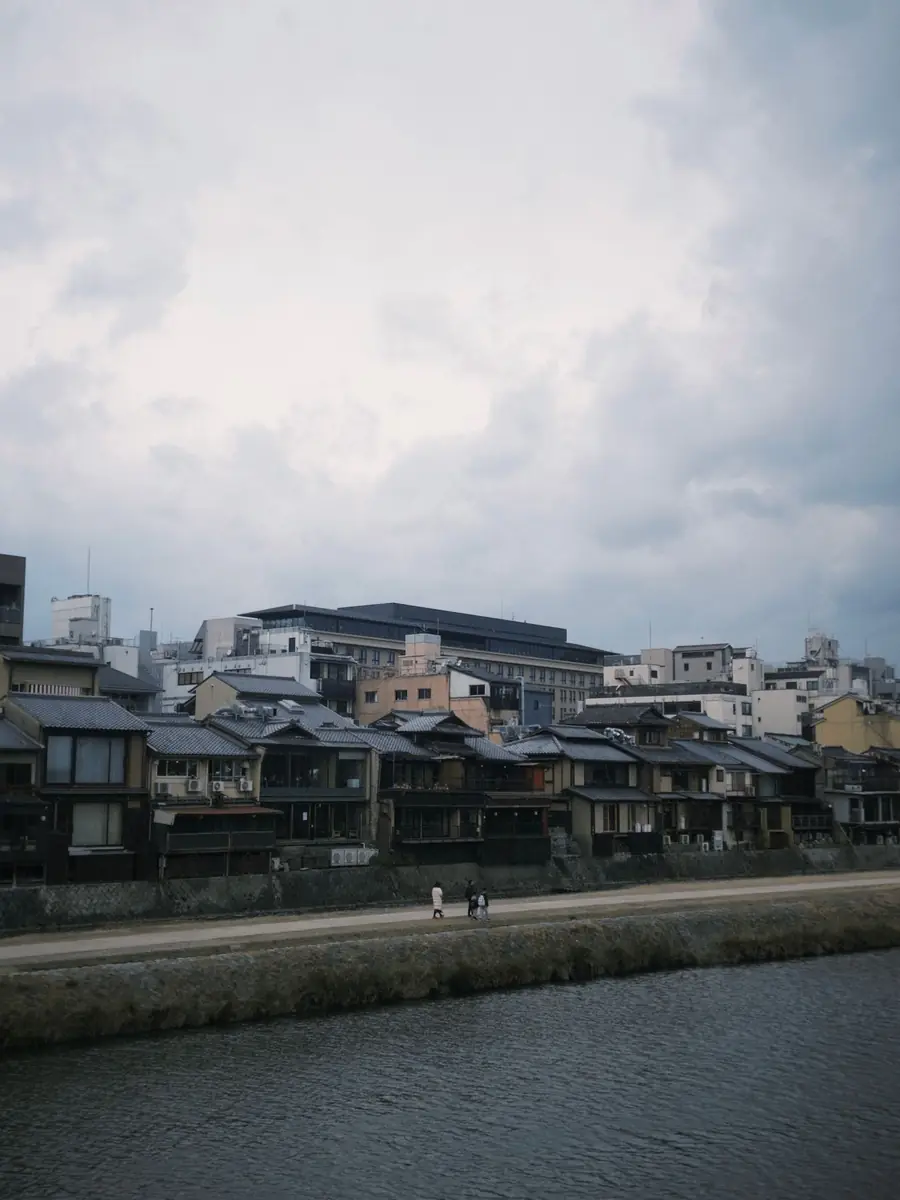
Stand on the north side of Shijo Bridge and look upstream. The long row of buildings on the west bank is the back of Pontocho, with the Higashiyama hills across the river to your right. From May to mid-October the dining platforms stand in front of the buildings, and when they light up in the early evening this is the picture most people want. The bridge pavement is busy, so stand close to the railing and let people pass behind you.
From the east bank
For a straight-on view of the whole row, cross either bridge and walk along the east bank of the river between Sanjo and Shijo. You are far enough back to fit the buildings, the platforms and the river into one frame, and the path is wide enough to stop without blocking anyone.
From Sanjo Bridge
From the middle of Sanjo Bridge, look north up the river towards the mountains, especially around sunset. The north end of Pontocho and the Kaburenjo theatre are just to the southwest of the bridge.
Inside the lane
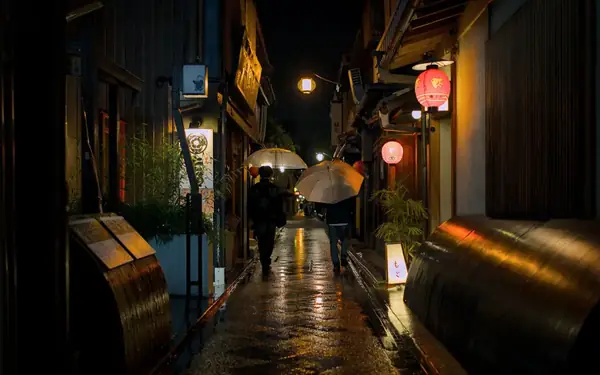
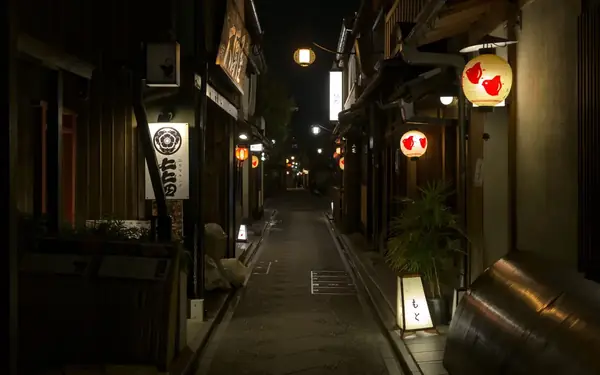
The view straight down the lane, with lanterns receding into the distance, works best from the ends, where you can step aside. In the middle of the lane, look for details instead: the plover (chidori) emblem on the lanterns, the numbered signs at the side passages, lattice fronts, noren curtains and the Kaburenjo theatre at the north end.
Along the Takase River
One street west, the shallow Takase River runs under willows and cherry trees. It is quieter than the lane, and in early April, with blossom hanging over the water, it is one of the prettiest spots in central Kyoto.
When the light is best
Dusk is the time to aim for. For about half an hour after sunset there is still colour in the sky while the lanterns and windows are already lit, so you can see both the street and its lights. Once it is fully dark, the lane becomes a strip of lantern light with black sky above. Sunset in Kyoto ranges from about 16:45 in early December to about 19:15 in late June and early July. Our evening planner gives the exact sunset and dusk times for any date.
Early morning is the other good time. The lane is almost empty and you can photograph the architecture without crowds. Restaurants are closed, so the lanterns are off.
Rain helps more than you might expect. Wet paving reflects the lanterns and the crowds thin out. See a rainy day near Pontocho.
Manners in the lane
- Do not stop in the middle of the lane. It is very narrow. Step into a gap before you raise your camera, and keep it brief.
- Leave the tripod at home. There is no room for one in the lane without blocking it.
- Do not photograph geiko and maiko without permission. They are usually on their way to work. Never follow, block or pose next to them for a picture.
- Respect signs and private spaces. Do not walk into side passages marked private, restaurant entrances or gardens for a shot, and follow any signs asking you not to take photos.
- Ask before photographing people. Restaurant guests on the platforms, staff and residents have the right not to appear in your pictures.
- Keep the flash off at night, both for the people around you and because it flattens the lantern light.
Drones
Do not fly a drone here. According to the City of Kyoto's official travel guide, the airspace over almost all of central Kyoto is restricted, and flying without the required permission and approval can be punished. National rules apply to drones weighing 100 grams or more, including the battery. City and prefectural parks have their own restrictions, and the riverbanks are crowded with people. Even with permission, a drone over a residential lane would be unwelcome.
A short photo walk
Start on Sanjo Bridge about half an hour before sunset. Walk south through the lane while the lanterns come on, pausing at Pontocho Park, and come out at Shijo-dori. Cross to the north side of Shijo Bridge for the platform view as the sky turns deep blue, then go down to the east bank and walk north for the full row of lights across the water. The whole walk is about 1.5 kilometres and takes about an hour.