Kyoto's Five Geisha Districts: Where Pontocho Fits In
 By Max R., last reviewed , 4 min read
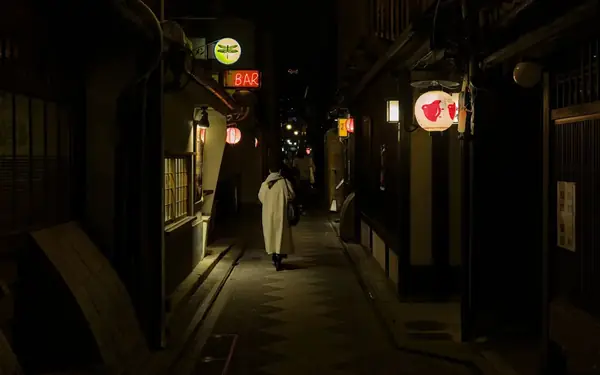
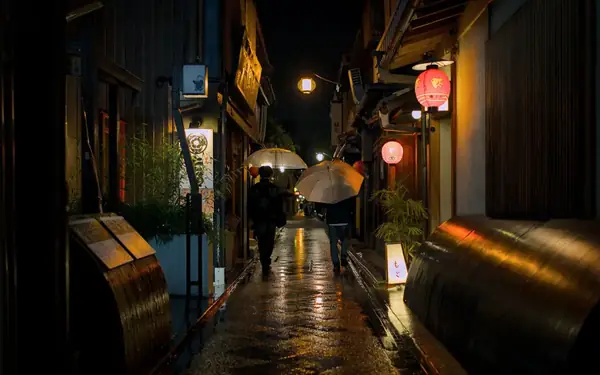
Walk through Pontocho in the evening and you are in one of only five places in Kyoto where geiko and maiko still live, train and work. Each of these districts, called kagai, has its own history, its own emblem and its own public dance. Knowing a little about all five makes the one you are standing in easier to read.
What a kagai is
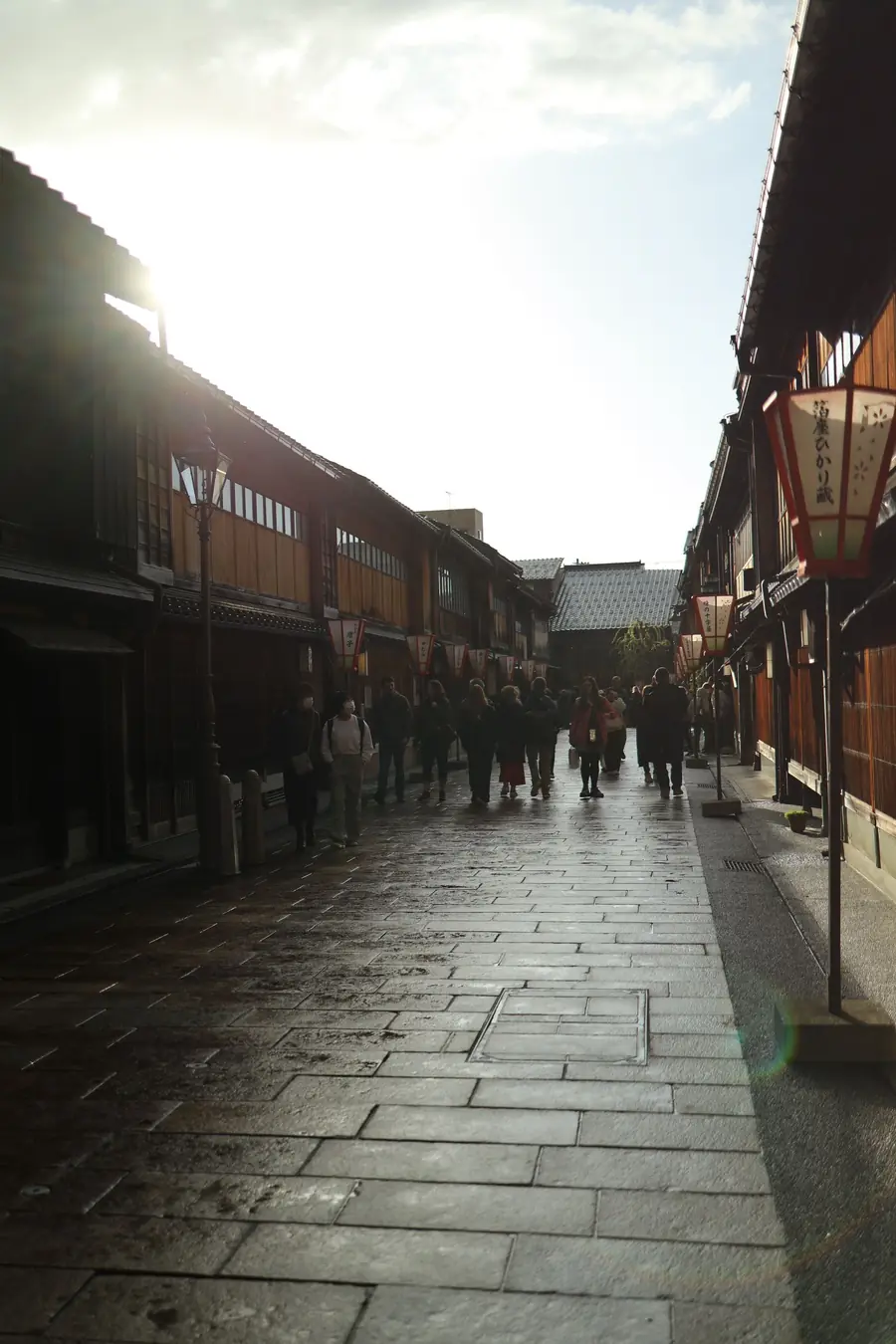
Kagai literally means "flower town". In practice it is a small neighbourhood of teahouses (ochaya), where guests are entertained, and the houses (okiya) where geiko and maiko live and are managed. Restaurants, bars and ordinary homes share the same streets. The City of Kyoto refers to the five together as the gokagai.
A private evening at a teahouse, with dance, music and conversation, is still arranged mostly through introductions from regular customers. That is why the districts can look closed to visitors. They are not museums, though: people work here every night, which is the main reason for the etiquette asked of visitors.
Geiko and maiko
Geiko is the Kyoto word for geisha: a professional entertainer trained in traditional dance, music and the art of hosting. Maiko are apprentices, usually starting in their mid to late teens and training for several years before becoming geiko.
You can often tell them apart at a glance. Maiko wear brighter kimono with long, trailing obi sashes, tall wooden sandals and elaborate hairstyles made with their own hair. Geiko dress more quietly and wear wigs for formal occasions. The change from one to the other is called erikae, "turning the collar", because a maiko's red collar is replaced by the white collar of a geiko.
The five districts at a glance
| District | Where | Emblem | Public dance |
|---|---|---|---|
| Gion Kobu | Gion, around Hanamikoji and Shirakawa | A ring of linked dumplings | Miyako Odori, April |
| Gion Higashi | Gion, north of Shijo-dori near the Gion Kaikan | Linked dumplings | Gion Odori, early November |
| Miyagawacho | East bank of the Kamo River, south of Shijo | Three linked rings | Kyo Odori, April |
| Pontocho | West bank, between Sanjo and Shijo | A plover (chidori) | Kamogawa Odori, May |
| Kamishichiken | Northwest Kyoto, by Kitano Tenmangu Shrine | Five dumplings on skewers | Kitano Odori, late March to early April |
Dance months are the usual ones; exact dates are announced each year by the districts.
Gion Kobu
The largest and best known of the five, centred on Hanamikoji Street south of Shijo-dori and the canal-side lanes of Shirakawa to the north. Its spring dance, the Miyako Odori, began in 1872 as part of an exhibition meant to revive Kyoto after the capital moved to Tokyo, and is staged at the district's own Kaburenjo theatre.
Gion Higashi
The smallest district, a few streets east of Gion Kobu. The two were once a single district, later divided in two by the prefecture. Gion Higashi is the only one of the five whose main public dance is in autumn: the Gion Odori, held for about ten days from 1 November at the Gion Kaikan theatre.
Miyagawacho
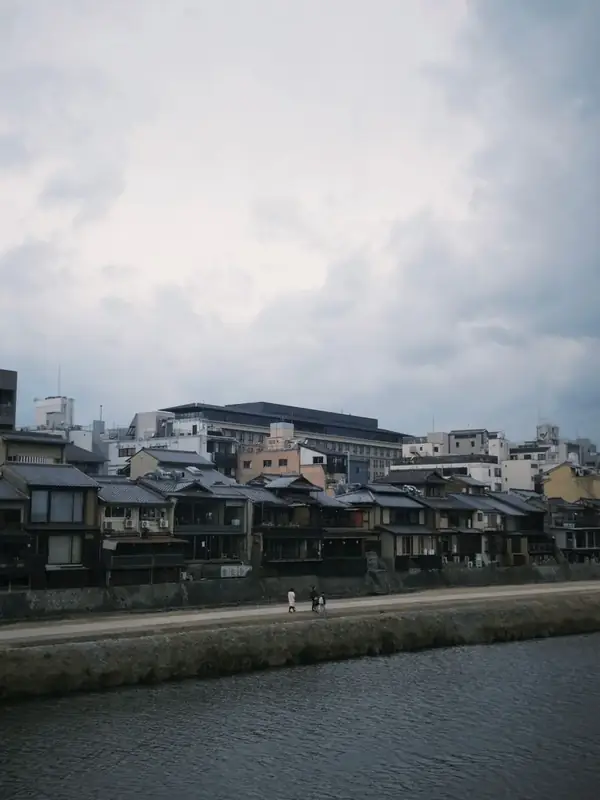
A district of long, straight streets running south along the east bank of the Kamo River from the Minamiza kabuki theatre. Its links with the theatre go back centuries, and its spring dance, the Kyo Odori, is held in April. From the south end of Pontocho it is about ten minutes on foot across Shijo Bridge.
Pontocho
A single narrow lane squeezed between the Kamo River and the Takase River, which grew up on reclaimed riverbed in the seventeenth century (more in our short history). Look for the plover on the lanterns. Its dance, the Kamogawa Odori, fills most of May at the Pontocho Kaburenjo at the north end of the lane, and an autumn recital follows in October.
Kamishichiken
The odd one out, a long way from the river in the northwest of the city, beside Kitano Tenmangu Shrine. It is often called the oldest of the five. Its name, "the upper seven houses", comes from seven teahouses said to have been built for visitors to the shrine. The Kitano Odori is usually the first of the spring dances, running from late March into early April. Allow around half an hour by bus or taxi from central Kyoto.
How visitors can see geiko and maiko
The simplest way is to buy a ticket for one of the public dances. They are open to anyone, they explain themselves on stage, and seats range from a few thousand yen upwards. Several include an optional tea ceremony served by maiko before the show. Spring is the busiest time, with four of the five districts performing between late March and May; in autumn there are smaller recitals and the Gion Odori.
In the streets, you may see geiko and maiko on their way to appointments in the early evening, in Pontocho as much as in Gion. Treat them as people going to work. Do not follow, block or touch them, and do not photograph them without permission. Some lanes in Gion Kobu are private roads with signs banning photography, and the rules are enforced. The same courtesy applies in every district.
Seeing more than one district
Four of the five are close together. From Pontocho Park, cross Shijo Bridge and you reach Gion in about five minutes; Miyagawacho is just south of the bridge on the same side, and Gion Higashi is a few streets further north and east. An evening walk that starts in Pontocho and ends among the teahouses of Shirakawa takes under an hour at an easy pace. Kamishichiken needs a separate trip, ideally combined with a visit to Kitano Tenmangu Shrine.