Gion Matsuri Near Pontocho: Dates, Routes and Crowds
 By Max R., last reviewed , 4 min read
Every July, Kyoto's biggest festival takes over the streets a few minutes from Pontocho. The lane itself is not part of the Gion Matsuri, but the parade turns the corner at its south end, the portable shrines of Yasaka Shrine spend a week just up the road, and on the busiest evenings the whole of Shijo-dori fills with people. Below is the July calendar from Pontocho's point of view: what happens on which day, and what it means for an evening in the lane.
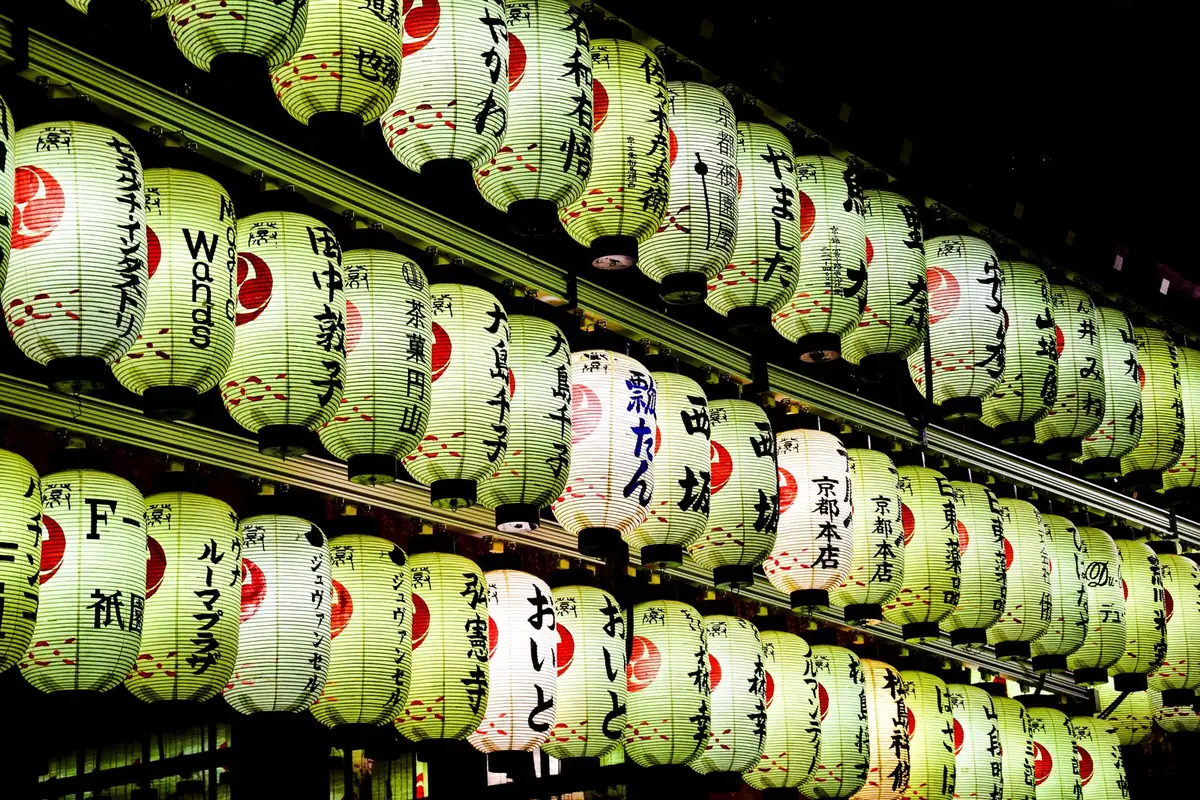
What the Gion Matsuri is
The festival belongs to Yasaka Shrine, at the far east end of Shijo-dori. It traces its origins to 869, when an epidemic swept the capital and rites were held to calm the spirits believed to cause it. Over the centuries the neighbourhoods of the merchant town added huge decorated floats, called yama and hoko, and those floats are what most visitors come to see. Today 34 of them take part, and the float events are listed by UNESCO as Intangible Cultural Heritage.
The festival lasts the whole of July, but most of the month is made up of small ceremonies. The big crowds come on a handful of days.
The July calendar, and what it means for Pontocho
| Date | What happens | Effect near Pontocho |
|---|---|---|
| 10 July | Mikoshi Arai: a portable shrine is carried to Shijo Bridge in the evening and purified with water from the Kamo River | Crowds on Shijo Bridge for a short time |
| 10–14 July | Floats for the first parade are assembled in the streets around Shijo and Karasuma | Little effect |
| 14–16 July | Yoiyama evenings: floats lit with lanterns, stalls and music | Very busy; Shijo-dori closed to cars from about 18:00 on 15 and 16 July |
| 17 July, morning | First float parade (Saki Matsuri), from 9:00 | Floats turn at Shijo-Kawaramachi, a minute from the south end of the lane |
| 17 July, evening | Shinkosai: three portable shrines leave Yasaka Shrine for the Otabisho on Shijo-dori | Large crowds along Shijo-dori |
| 21–23 July | Smaller Yoiyama evenings for the second parade | Moderate |
| 24 July | Second float parade (Ato Matsuri) from 9:30, the Hanagasa flower-hat procession, and the shrines' return to Yasaka in the evening | Busy around Kawaramachi and Shijo |
| 28 July | Second Mikoshi Arai on Shijo Bridge | Brief crowds on the bridge |
Times are those of recent years. Check the City of Kyoto's guide for the current year before you plan around them.
The float parades
On 17 July the first procession leaves Shijo-Karasuma at 9:00 and heads east along Shijo-dori, then north up Kawaramachi-dori and west along Oike-dori. The floats have no steering, so at every corner teams of men turn them on split bamboo laid on the road, a manoeuvre called tsujimawashi. The turn at Shijo-Kawaramachi, right by the south end of Pontocho, is one of the most popular places to watch, and people start claiming space early in the morning.
On 24 July the smaller second procession runs the same route in reverse, leaving Karasuma-Oike at 9:30 and coming south down Kawaramachi-dori before turning west along Shijo-dori.
Both parades are over by early afternoon.
The Yoiyama evenings
On the three evenings before each parade, the floats stand in the streets west of Kawaramachi, lit by paper lanterns, with festival music playing from their decks. Some neighbourhoods open their old townhouses to show family treasures. On 15 and 16 July the main streets are closed to traffic and turned into a pedestrian street party. The atmosphere is great, but it is also very hot and very crowded; around Shijo and Karasuma you will be moving at a shuffle.
For Pontocho this means the Shijo end of the lane is packed from late afternoon. If you have a dinner booking in the lane, approach from the Sanjo end, which stays calmer.
The portable shrines on Shijo-dori
The floats are the spectacle, but in religious terms the heart of the festival is the shrines' deities. On the evening of 17 July they are carried in three heavy portable shrines (mikoshi) from Yasaka Shrine to the Otabisho, a temporary resting place on Shijo-dori near Teramachi, a few minutes' walk west of Pontocho. They stay there for a week, and on the evening of 24 July they are carried back to the shrine. Watching the bearers rock a mikoshi through the streets, shouting as they go, is less famous than the parade and often more exciting.
Planning a July visit to Pontocho
- Book dinner early. July is also high season for the riverside dining platforms, and festival evenings fill fast.
- Expect heat. July in Kyoto is hot and humid, often above 30°C by the afternoon. Carry water and take breaks in the shade.
- Watch for the rainy season. It usually ends in mid to late July, so early festival days can be wet.
- Use the Sanjo end. On busy evenings, Keihan Sanjo and the subway at Kyoto Shiyakusho-mae are easier than the stations at Shijo.
- Stations get crowded. Platforms around Shijo are packed when the Yoiyama evenings wind down, so leave a little earlier or walk to Sanjo.
For any date in July, our evening planner shows which festival events fall on that day, the sunset time and a crowd estimate.